Businesses today operate in an environment shaped by speed, availability, and user expectations. Customers want answers immediately. Teams want systems that reduce manual effort. Decision-makers want predictable growth without rising operational strain. In this context, a website chatbot has become a practical operational asset rather than a marketing experiment.
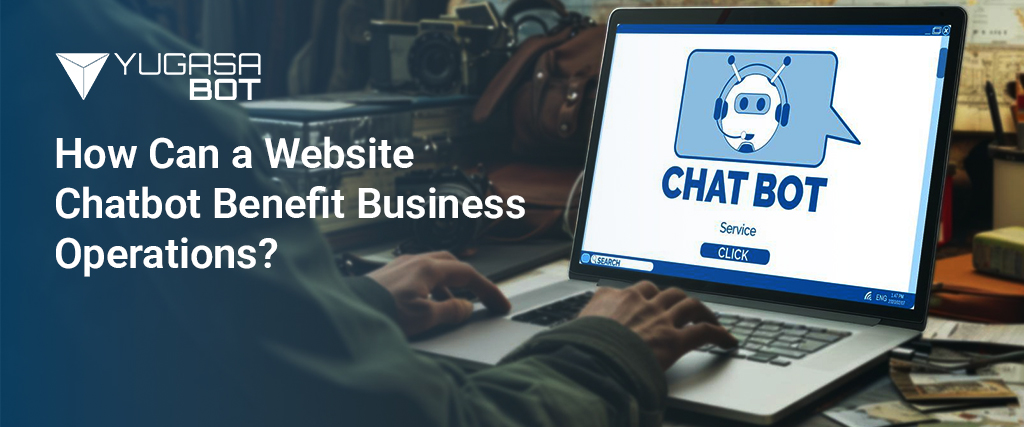
A modern website chatbot functions as a digital business assistant. It interacts with visitors in real time, understands intent, and responds with relevant information. This simple interaction model has a wide operational impact across support, sales, marketing, and data management. When implemented correctly, a chatbot reshapes how daily business activities are handled.
Understanding the Operational Role of a Website Chatbot
A website chatbot is often the first interaction point between a visitor and a business. This first interaction sets expectations. When a chatbot responds instantly, the business appears organised and attentive. When it guides users clearly, trust develops early.
From an operational perspective, this reduces uncertainty. Visitors do not wait. Teams do not rush to respond manually. Processes become smoother without visible effort. The chatbot quietly absorbs workload that would otherwise interrupt staff.
Modern chatbots rely on natural language processing. They interpret meaning instead of relying on fixed commands. This allows conversations to feel structured and purposeful. As a result, operations benefit from clarity rather than chaos.
Improving Customer Response Time Across the Organisation
Speed as an Operational Advantage
Response time directly affects customer perception. A delayed reply often leads to frustration or abandonment. A website chatbot replies within seconds. This response speed remains constant, regardless of traffic volume.
Operational teams benefit from this stability. There are no sudden backlogs. There are no missed enquiries. The flow of interaction remains balanced throughout the day.
This consistency builds trust. Customers feel acknowledged. The business appears reliable without increasing human effort.
Reducing Visitor Drop-Off
Many users leave a website when they cannot find quick answers. A chatbot prevents this by engaging visitors at the right moment. It answers questions before confusion builds.
This reduces bounce rates naturally. More conversations begin. More users stay engaged. From an operational standpoint, this means fewer lost opportunities and better use of incoming traffic.
Reducing Day-to-Day Operational Load
Managing Repetitive Enquiries Efficiently
Every business receives similar questions repeatedly. These questions consume time and interrupt workflow. A chatbot handles these interactions consistently.
Questions about pricing, services, bookings, delivery, or policies are answered automatically. Human teams are no longer distracted by routine tasks. Their attention shifts to issues that require reasoning or personal judgement.
This change improves internal efficiency. Workdays become more structured. Teams operate with less stress.
Supporting Human Teams Without Replacement
A chatbot supports staff rather than replacing them. It filters noise from daily operations. When an enquiry becomes complex, the chatbot transfers the conversation to a human agent.
Context is preserved during this transfer. Customers do not repeat information. Staff begin conversations fully informed.
This collaboration improves service quality. It also improves employee satisfaction. Teams focus on meaningful work instead of constant repetition.
Strengthening Sales Operations Through Automation
Guiding Prospects Through Conversations
A chatbot plays an active role in sales operations. It does not wait for users to navigate pages alone. It guides them through conversation.
By asking relevant questions, the chatbot identifies intent. It understands what the visitor is looking for. This information is passed to sales teams in a structured form.
Sales teams receive qualified prospects. Time is spent on meaningful conversations. The sales process becomes more focused and organised.
Improving Lead Quality and Follow-Up
Chat-based lead collection feels natural. Visitors are more willing to share information in conversation than through forms. This results in higher-quality leads.
These leads already have context. They have interacted with the brand. Follow-up conversations feel relevant rather than cold.
Operationally, this improves conversion efficiency. Sales cycles shorten. Effort aligns with outcomes.
Supporting Customer Support Operations at Scale
Handling High Volumes Without Disruption
Customer support often experiences unpredictable demand. Manual systems struggle during peak periods. A chatbot absorbs first-level support consistently.
Order tracking, appointment scheduling, account queries, and general guidance are handled automatically. Response quality remains uniform.
Support teams regain control. Backlogs reduce. Service delivery remains steady even during high demand.
Improving Customer Satisfaction Through Clarity
Customers value clarity and continuity. A chatbot provides both by maintaining conversation context and offering accurate responses.
When escalation occurs, it feels smooth rather than abrupt. Customers feel heard. Support interactions become structured.
This positively affects long-term customer relationships. Satisfaction increases gradually. Retention improves.
Enabling Continuous Business Availability
Operating Beyond Traditional Business Hours
Customers no longer interact only during working hours. Enquiries arrive late at night or during weekends. A chatbot remains active at all times.
This constant availability changes operational reach. The business remains responsive without expanding shifts or staff. Opportunities are captured continuously.
This builds trust. Customers feel supported regardless of timing. The business appears dependable.
Supporting a Global Audience
For businesses with international visitors, time zones often limit interaction. A chatbot removes this limitation. Every visitor receives equal attention.
Operations extend globally without added complexity. Communication remains seamless. Growth becomes manageable.
Supporting Industry-Specific Operational Needs
Adapting to Different Business Models
Different industries follow different workflows. A chatbot adapts through training and configuration.
In healthcare, chatbots assist with appointment booking and patient guidance. In eCommerce, they manage delivery queries and returns. In HR environments, they support candidate screening and scheduling.
This adaptability increases operational value. Processes align with industry requirements. Efficiency improves without disruption.
Using Conversational Data to Improve Operations
Turning Conversations Into Insights
Every chatbot interaction produces data. This data reflects customer behaviour and intent. Patterns emerge over time.
Businesses learn which questions appear most often. They understand peak enquiry periods. They identify service gaps.
This information supports operational planning. Decisions rely on actual usage rather than assumptions.
Supporting Continuous Process Improvement
Operational improvement becomes ongoing. Small adjustments are informed by real conversations. Responses are refined. Processes evolve.
Over time, these adjustments lead to better performance. Efficiency increases gradually. Stability improves.
Supporting Agile Management With No-Code Control
Modern chatbot platforms offer no-code management. Teams update responses without technical support. This allows faster adaptation.
Marketing teams adjust messaging. Support teams refine answers. Operations remain flexible.
This independence removes delays. Departments collaborate more effectively. Internal workflows improve.
Maintaining Data Security and Compliance
Operational trust depends on data protection. Chatbots often handle sensitive information. Security standards matter.
Modern platforms support compliance requirements and encrypted communication. Data remains protected.
For regulated industries, this stability supports long-term operations. Risk exposure reduces. Reputation remains protected.
Supporting Scalable Business Growth
As businesses grow, interaction volume increases. Manual handling becomes unsustainable. A chatbot scales naturally.
It manages thousands of conversations without decline in performance. Service quality remains consistent.
This supports confident expansion. Operations scale smoothly. Planning becomes strategic rather than reactive.
Supporting Small Businesses Through Free Chatbot Access
Free chatbot options reduce the entry barrier. Small businesses adopt automation early. They observe results without financial pressure.
Operations improve gradually. Teams gain confidence in automation. Investment decisions become informed.
Early adoption strengthens operational maturity. Processes develop steadily. Growth feels controlled.
Long-Term Operational Impact of a Website Chatbot
Over time, a chatbot becomes part of everyday operations. Its presence feels natural. Efficiency improves quietly.
Teams focus on meaningful tasks. Customers receive consistent support. Costs remain predictable.
A website chatbot functions as a digital operational layer. It connects customers, teams, and data into a stable system.
Frequently Asked Questions
What types of businesses benefit most from a website chatbot?
Any business that receives regular customer enquiries benefits from a chatbot. Service-based companies, eCommerce stores, healthcare providers, and SaaS platforms gain strong operational value.
Can a chatbot work alongside human support teams?
Yes. A chatbot supports human teams by handling routine tasks and passing complex issues with context. This improves efficiency without removing the human element.
Is a website chatbot suitable for small businesses?
Yes. Many chatbot platforms offer free access or low-cost plans. This allows small businesses to improve operations without heavy investment.
Does a chatbot improve customer experience?
A chatbot improves experience through fast responses, clarity, and continuous availability. Customers feel supported and informed throughout their interaction.
How long does it take to see operational benefits?
Some benefits, such as faster response time, appear immediately. Others, such as improved efficiency and data insights, develop over time with continued use.
Final Thoughts
A website chatbot benefits business operations in practical and measurable ways. It improves speed, organisation, and consistency across departments. It supports growth without increasing operational strain.
Rather than replacing people, it supports them. It creates balance between automation and human expertise. For businesses aiming for sustainable operations, a chatbot is no longer optional. It is a strategic operational tool whose value increases with time.